Electricity Grid Fees Austria 2027 | CheckEverything.at
Electricity grid fees Austria 2027: a new capacity charge is planned. E-Control examples show who pays more, who saves, and how to cut your energy price.
Read more →
Energy in Austria – guide
Understand the electricity and gas market, read tariff types correctly, and switch providers without surprises.
Updated: 22 May 2026 · CheckEverything.at energy editorial team · Reading time around 9 minutes
Electricity costs Austrian households an average of about 31 to 35 cents per kWh in 2026 — but regional differences are substantial. Vienna sits at roughly 33 cents, Vorarlberg at about 28 cents, Carinthia above 36 cents. Natural gas runs approximately 11 to 14 cents per kWh. When you add network charges, the government's regulatory energy levy and the generation price, the picture is clear: switching saves money.
The Austrian energy market has been open since 2001. Households have been free to choose their electricity supplier since October 2001, and gas since October 2002. Yet many stay with their regional utility's default product for years — usually because the whole thing feels too complicated to sort out.
This guide brings order to the chaos: how the market works, what fixed-price, indexed and spot tariffs actually mean, how a switch is legally structured, and which federal subsidies are still available in 2026. All of it calibrated to Austrian conditions, with sources from E-Control, the Federal Ministry for Climate Action and the Chamber of Labour.
If you want to go straight to specific providers and tariffs, you will find the detailed guides on electricity, gas and heating directly below the topic boxes. If you want the full picture, keep reading — step by step.
How Austrian electricity prices are built, what smart meters and dynamic tariffs really change, and which suppliers serve households.
Open electricity guideGas market structure since liberalisation in 2002, tariff design, network fees by federal state and what to mind during a switch.
Open gas guideThree actors decide what lands on your electricity bill: the supplier (the company you sign with), the network operator (responsible for cables and meters in your region) and the state via taxes and levies. You are free to choose the supplier; you cannot choose the network operator – it is fixed by where you live (Wiener Netze in Vienna, Netz NÖ in Lower Austria, KNG-Kärnten Netz in Carinthia, and so on).
The regulator E-Control plays a central role. It publishes the official tariff calculator, supervises network charges and provides up-to-date market data. The Chamber of Labour also runs an independent electricity and gas price calculator. Both tools are ad-free and a useful second opinion next to any commercial tariff calculator.
Gas works the same way, only the names differ: supplier free, regional distribution operator fixed, oversight again with E-Control. Households who optimise electricity and gas separately tend to do better than those who pick a bundled offer.
The energy price per kWh is locked for the contract term, typically 12 or 24 months. Predictable – but if wholesale prices fall, you keep paying the higher rate, because the supplier prices in that risk.
Best for: Households who want a stable monthly bill and no nasty surprises.
Your price is linked to a public index – for electricity often the Austrian Electricity Price Index (ÖSPI), for gas a comparable benchmark – and is repriced quarterly. You move with the market, up and down.
Best for: Anyone willing to take market risk for a chance at a lower long-term average.
Your price tracks the EPEX SPOT exchange, usually on an hourly basis. A smart meter with quarter-hour readings is mandatory. You pay much less in off-peak hours and more in peaks.
Best for: Flexible households with a heat pump, EV or controllable hot-water tank – and the willingness to shift consumption.
What you get if you never actively switch. Usually middle-of-the-road, rarely competitive. A look at the E-Control or AK calculator almost always pays off.
Best for: People who never switch – which sadly is most people.
Switching is capped by Austrian law at three weeks (§ 76 ElWOG for electricity, § 123 GWG for gas). You do not need to cancel your old contract yourself – the new supplier handles that for you.
Pull up your most recent annual bill. You need consumption in kWh and your postcode. Without those numbers, no calculator can give you a serious comparison.
Use the E-Control calculator, the AK calculator or a commercial tariff calculator. Pay attention to commitment period, price guarantee, notice period and welcome bonuses with minimum-purchase clauses.
You will find it on your last bill or on your smart-meter display. It uniquely identifies your installation and is essential for the switch.
Enter your contract details and metering point with the new supplier. Sign the SEPA mandate and the power of attorney that authorises the new supplier to cancel the old contract.
You will usually get a switch confirmation within about 14 working days. Supply runs without interruption – Austrian regulation guarantees that explicitly.
An Austrian electricity bill has roughly three building blocks: the energy price (what your supplier charges for generation and distribution), the network charges (what the regional grid operator collects for transport and metering) and taxes and levies (electricity tax, green-energy contribution, VAT). The exact split shifts with wholesale prices and your federal state; E-Control publishes the latest figures in its price monitor.
| Component | Share (order of magnitude) | Goes to |
|---|---|---|
| Energy price | roughly one third of the bill | Supplier (your free choice) |
| Network charges | roughly one third of the bill | Regional grid operator (fixed) |
| Taxes and levies | roughly one third of the bill | Federal and state government |
Federal subsidies for photovoltaics, heating-system replacement, thermal renovation and the "Sauber Heizen für Alle" programme continue in 2026, but with annually adjusted budgets, rates and application windows. The Federal Ministry for Climate Action publishes the authoritative overview – including current rates – on umweltfoerderung.at. On top of that, individual states and municipalities run their own schemes.
Before you invest: check eligibility before placing the order. Many programmes reject applications submitted after a contract has already been signed. Free advice is available at the energy advisory office (Energieberatung) of your federal state.
Electricity grid fees Austria 2027: a new capacity charge is planned. E-Control examples show who pays more, who saves, and how to cut your energy price.
Read more →
Switching electricity provider in Austria is free, takes max three weeks by law, and you keep power throughout. The 2026 guide with sources.
Read more →
Austria's Strompreisbremse expired 31 December 2024. What does it mean for households in 2026? Consequences, new grid fees and next steps explained.
Read more →
PV, battery storage and wallbox subsidies in Austria 2026: current EAG rates, KPC wallbox status, bonuses, state grants — with official sources.
Read more →
How to compare electricity tariffs in Austria 2026: spot bonus traps, check price guarantees, calculate true total cost. Practical guide with sources.
Read more →
Gas network charges in Austria are rising in 2026 — but they are regulated, not optional. Three real levers for households, with official sources.
Read more →
Compare 40+ Austrian gas suppliers. Switch in 2 weeks. Current prices from 6.3c/kWh. Updated May 2026.
Read more →
Verbund Austria tariff 2026: Österreich-Strom from 9.50 ct/kWh, dynamic tariff terms, PV feed-in rates. Compared with Tibber and aWATTar.
Read more →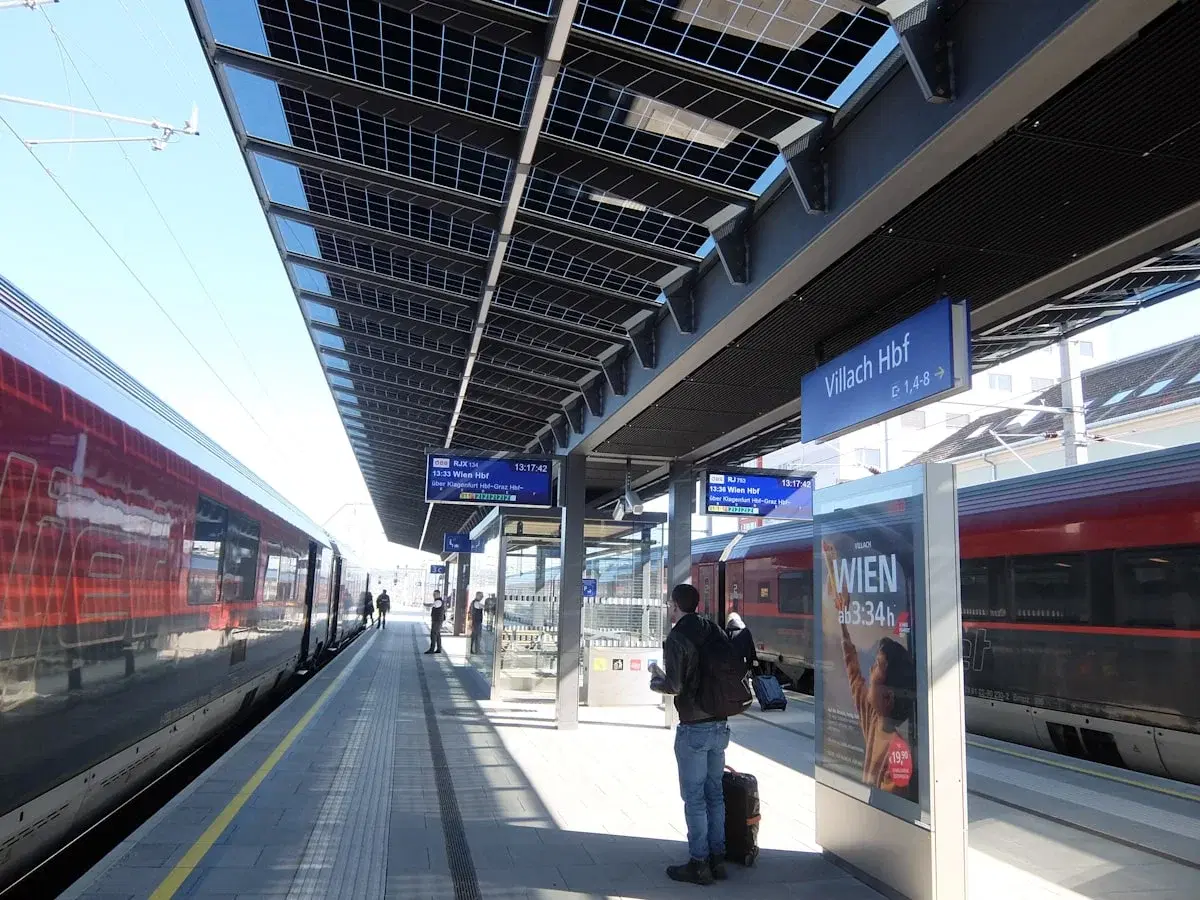
Solar savings Austria 2026: how smart meter, dynamic tariffs and self-consumption beat feed-in rates. Numbers, payback, and provider comparison.
Read more →
Austria's Strom-Sozialtarif starts April 2026 at 6 c/kWh net for the first 2,900 kWh. Eligibility, application steps, and how much you save explained.
Read more →
Dynamic electricity tariffs in Austria 2026: how hourly EPEX pricing works, which providers offer spot tariffs, what the new ElWG changes and who saves.
Read more →
Austrian electricity grid fees 2026 by state: E-Control SNE-V 2018 (2026 amendment), Wiener Netze, Netz NÖ, Salzburg AG, Tirol and Vorarlberg explained.
Read more →Three to six weeks. Supply is guaranteed throughout — at no point will you be without electricity or gas.
Your meter stays the same. The grid operator does not change either. Only the supplier changes — the company that bills you for your electricity or gas.
Yes. The switch itself costs nothing. You should however watch out for the cancellation period with your current supplier — some tariffs have minimum terms of 12 or 24 months.
Check at least once a year. Tariffs change, and what was the best deal two years ago may no longer be competitive today.
E-Control (Energie-Control Austria) is the Austrian regulatory authority for the energy market. It supervises network charges, publishes price comparisons and ensures market transparency. Its website e-control.at is one of the most important resources for consumers wanting to understand their rights and options.
No. The state electricity price brake ended in late 2024. Since the start of 2025 households once again pay the full market price. There is no blanket price cap for 2026.
Network charges are the fee for using the electricity or gas grid. They are set by the grid operators and regulated by E-Control. Consumers cannot reduce network charges — but switching supplier can lower the energy price, which usually makes up the larger portion of the bill.
Recipients of means-tested welfare (Sozialhilfe), compensation supplements (Ausgleichszulage), minimum pensions or housing benefit. Applications are handled by the Austrian Health Insurance Fund (ÖGK). The reduced tariff sits about 25 percent below the standard price.
Our partner durchblicker.at lists current electricity and gas tariffs with commitment periods, price guarantees and conditions for your specific metering point. See the advertising notice at the top of the page.
Open durchblicker.at