
NoVA Calculator Austria 2026/2027: Car Tax Explained
Calculate Austria's NoVA car tax for 2026 and 2027: formula, CO2 deduction 91 or 88 g/km, malus over 155 g/km, exemptions and the expat export refund.
Read more →Law, tread depth, EU tyre label & switch-over tips — based on ÖAMTC, ARBÖ and KFV guidance
Browse Summer TiresQuick answer
Austria has a situational winter-tyre obligation between 1 November and 15 April when winter conditions exist (§ 102(8a) KFG), but there is no summer-tyre obligation. Switch to summer tyres when outside temperatures stay consistently above 7 °C — the established rule of thumb from ÖAMTC and ARBÖ. The legal minimum tread depth is 1.6 mm (§ 4(4) KFG-DV 1967); ÖAMTC and KFV recommend at least 3 mm for safety. The EU tyre label (Regulation EU 2020/740, in force since May 2021) shows fuel efficiency, wet grip and rolling noise.
Key facts
Updated: 27 May 2026 · Author: CheckEverything.at Editorial Team · Research-based with sources from ÖAMTC, ARBÖ, KFV, EU Tyre Label Regulation
The rule of thumb "O to O" (October to Easter) applies to winter tires. Once temperatures consistently stay above 7°C, you should switch to summer tires. Summer tires offer shorter braking distances and better grip in warm weather.
Rubber compound does not harden in heat
Tread design for optimal water drainage
Low rolling resistance saves fuel
Balanced performance, low rolling resistance
Long-lasting with excellent wet grip
Sporty and environmentally friendly
Fuel-efficient with high comfort
Affiliate disclosure: We may earn a commission on purchases made through these links. Prices may change. Promotions and availability follow the current terms at reifen.at.
Pay attention to fuel efficiency class (A-E), wet grip (A-E) and rolling noise. These values can serve as guidance.
Especially important in Austrian summers with frequent thunderstorms. Tires with class A or B may offer better properties.
Summer tires should ideally be fresh. The DOT number shows production date - choose not older than 2-3 years if possible.
Summer tires are usually driven more than winter tires. Quality tires with longer lifespan can be more economical.
Clean tires before storage, measure tread depth (min. 1.6 mm legally, 3 mm recommended) and check for damage.
Store cool, dry and dark. Avoid UV radiation and ozone (from electric motors).
With rim: stacked flat or hanging on rim hooks. Without rim: standing upright, rotate slightly every 4 weeks.
Mark position on vehicle (FL, FR, RL, RR) to observe running direction and rotation during mounting.
Shows fuel efficiency (A-E), wet grip (A-E) and external rolling noise in dB. Mandatory since May 2021 for new tires.
Four-digit number shows production week and year, e.g. "1824" = week 18, 2024. Found on tire sidewall.
Number before speed index, e.g. "91" = 615 kg load capacity per tire. Must match vehicle specifications.
Letter after tire size, e.g. "V" = up to 240 km/h, "W" = up to 270 km/h. Must at least reach vehicle top speed.
The rule of thumb "O to O" (Easter to October) is a guideline. At constant temperatures above 7°C, summer tires may offer better properties. In Austria there is no summer tire requirement, but winter tire requirement from November 1 to April 15 in snow/ice conditions.
Legally 1.6 mm minimum tread depth is required. Experts recommend at least 3 mm for good wet grip. At 3 mm new tires should be considered.
In Austria NO! In winter conditions (snow, slush, ice) from November 1 to April 15, winter tires or M+S tires with min. 4 mm tread depth must be mounted. Violations can result in fines up to 5,000 Euros.
Service life depends on driving style, mileage and care. Average 30,000-50,000 km or 4-6 years are possible. Tires older than 8 years should be replaced regardless of tread, as rubber ages and becomes brittle.
Premium tires may offer better wet grip, shorter braking distances and longer lifespan. Budget tires meet legal minimum requirements. The decision depends on mileage, driving style and budget. Tests can help with selection.
⚖️ Important Notice: All information without guarantee. Prices, technical data and legal regulations may change. Always check current manufacturer specifications, vehicle documents and legal requirements. We accept no liability for the accuracy of the information.
Calculate Austria's NoVA car tax for 2026 and 2027: formula, CO2 deduction 91 or 88 g/km, malus over 155 g/km, exemptions and the expat export refund.
Read more →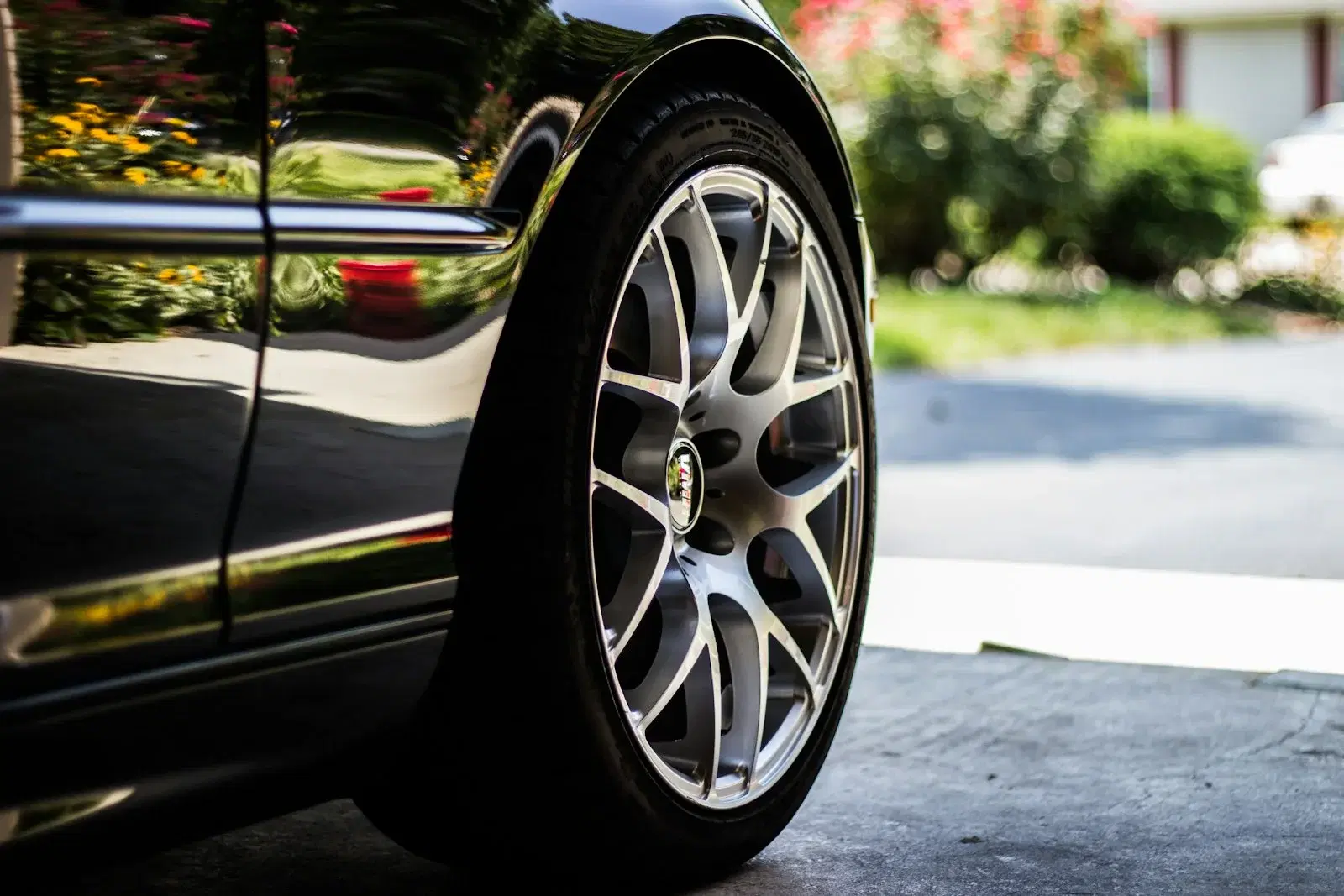
What alloy wheels really cost in Austria: a July 2026 price sample, TPMS sensors, wheel bolts and centring rings, plus what to check when buying used.
Read more →
Austria Vignette 2026: annual EUR 106.80, 10-day EUR 12.80. Car, motorcycle, trailer rules plus Brenner and Tauern tolls. ASFINAG sources, May 2026.
Read more →